
|
8/21/2026 the average farmer is 58. here's how automation keeps the next generation on the landRead Now
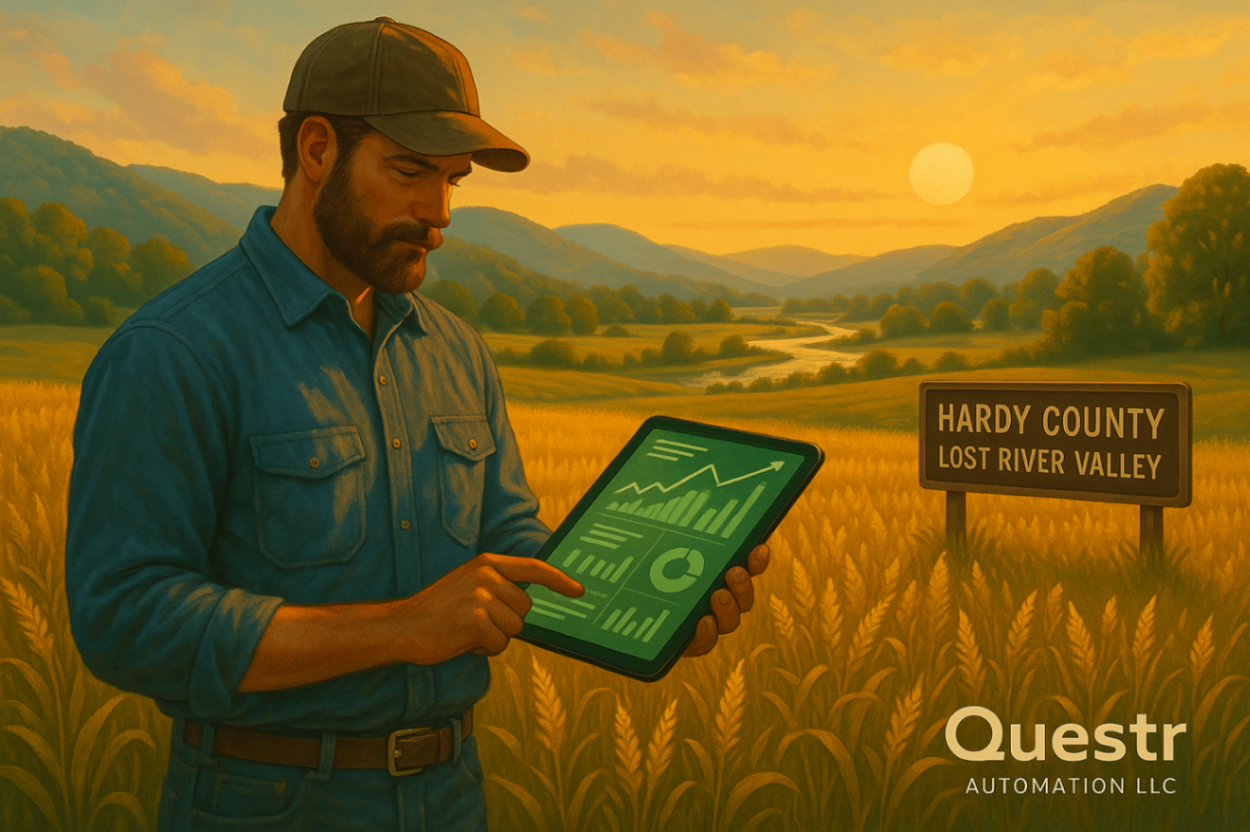
By Dave Oberting, Questr Automation LLC, [email protected], 304.679.1889. You can survive a bad market. You can recover from a difficult growing season. But if nobody is prepared to run the farm next, the future gets much harder to protect. According to the 2022 USDA Census of Agriculture, the average American farm producer is 58.1 years old, and more than 63% are at least 55. Family farms still account for the vast majority of U.S. producers : but many are approaching a succession decision without a clear, affordable path forward. For farms in Virginia and across Appalachia, automation is becoming part of that succession plan. Make the farm less physically demandingThe next generation may want to farm, but they may not want to spend 12 hours a day on repetitive, back-breaking chores. That is understandable. Carrying feed, checking water lines, monitoring livestock, moving equipment, and recording field conditions all consume time and energy. Practical automation can handle portions of those jobs through tools such as:
These systems do not replace good judgment. They reduce the number of tasks that require someone to be physically present every minute.
Improve the succession mathA farm must support the people who operate it. That means succession is not only an emotional conversation : it is a financial one. Consider a farm that saves 400 labor hours per year. At $25 per hour, that represents $10,000 in annual labor value. Reduce wasted water, feed, fertilizer, or fuel by another 10% to 20%, and the operation may generate thousands of dollars more in breathing room. That matters when the farm needs to:
This is why we view automation as a cost-saving essential, not a luxury reserved for large operations. Start Small, Scale FastYou do not need to automate the entire farm at once. Start with one measurable problem : perhaps water use, feeding labor, or daily monitoring. Questr’s ROOST initiative follows that same Start Small, Scale Fast approach. The goal is to identify proven systems, install them on working farms, and measure whether they save time, reduce costs, or improve consistency. The people who install and maintain those systems matter, too. ROOST’s apprenticeship track, developed with Blue Ridge Community College, connects agricultural knowledge with modern technical skills. Training in advanced manufacturing and skilled trades helps create local career paths in automation maintenance, precision agriculture, and smart-farm operations.
That gives the next generation another reason to stay : or come back. They can build a career on the farm while working with technology, solving problems, and improving the business their family worked to build.
If you are planning for the next generation, start by listing the three tasks that consume the most labor or create the most physical strain. Questr can help you evaluate affordable farm automation for Virginia small farms and identify practical farm labor shortage solutions for family farms. Contact us to start the conversation : no pressure, just a clearer look at what may fit your operation. SEO Post Description: Learn how practical automation can strengthen farm succession, reduce repetitive labor, improve profitability, and create high-tech career paths for the next generation of Virginia family farmers.
0 Comments
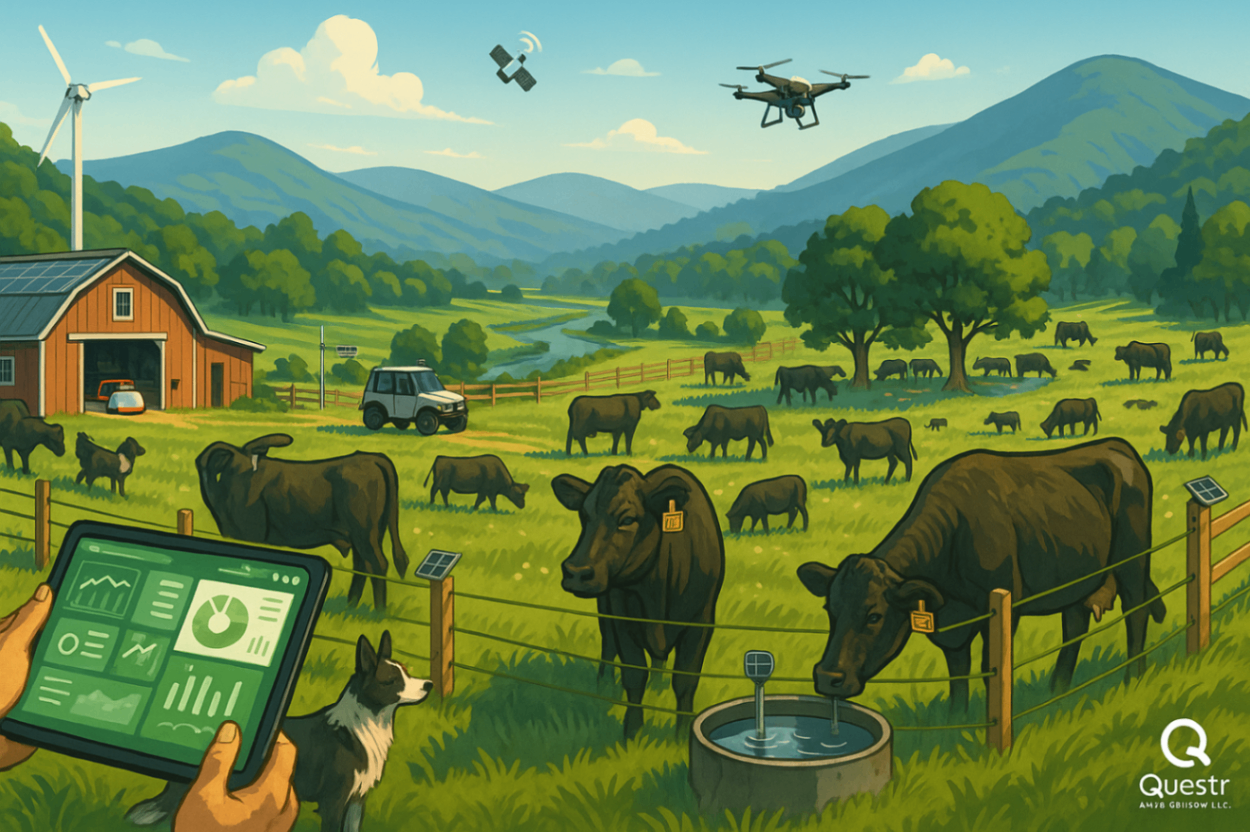
By Dave Oberting, Questr Automation LLC, [email protected], 304.679.1889. You know the feeling: that pit in your stomach when you walk the pasture and find a calf that’s been down for hours, or worse, one that didn’t make it through the night. In the busy season, it’s impossible to have eyes on every animal every minute. You’re stretched thin, labor is hard to find, and let’s be honest: your time is worth a lot more than $25 an hour. For years, "precision livestock monitoring" felt like a luxury reserved for the massive feedlots out West. But for us here in Appalachia, the math is changing. Start Small, Scale Fast: The $35 SolutionWe’re not talking about replacing your intuition: nothing beats a farmer’s eye. But what if you knew exactly which cow to look at before she even showed symptoms? New tools, like the Ori Cattle smart ear tags, are entering the market at a $35 pilot price point. Unlike older systems that cost hundreds per head plus a monthly subscription fee (which eats your profit faster than a drought eats grass), these tags are designed to be a cost-saving essential.
Catch the Quiet SignsThese tags monitor heart rate, movement, and temperature 24/7.
Think about it: if one tag costs $35 and it helps you save just one calf from respiratory disease by catching it 48 hours early, the system has paid for itself across your entire small herd. That’s the real ROI of affordable farm automation.
Bringing ROOST to VirginiaAt Questr Automation, our ROOST (Rural Operations Optimization & Systems Trial) program is expanding our focus to help Virginia family farms navigate these new waters. We don’t just sell tech; we help you find the funding: like USDA REAP or EQIP grants: to make these upgrades virtually no-cost.
You don't need a degree in computer science to make this work. You just need a partner who understands that precision livestock monitoring for cattle and poultry should serve the farmer, not the other way around. Ready to see the data? Check out our ROI Calculator or contact us today to see if your Virginia farm qualifies for upcoming pilot grants. Let's keep your herd healthy and your margins black. How to Connect Remote West Virginia Pastures Without a Cell Signal
By Dave Oberting, Questr Automation LLC, [email protected], 304.679.1889. We’ve all been there. You’re standing in a back pasture: maybe down in a holler or behind a steep ridge: and you pull out your phone to check a weather report or a gate sensor, only to see those dreaded words: No Service. In Appalachia, "no bars" isn't just an inconvenience; it’s a massive barrier to the kind of smart farming that saves time and money. If you’ve looked at ag-tech before and thought, "This won't work on my ridge," I hear you. But here is the good news: you don't actually need a cell signal to have a smart farm. You just need to build your own private "mini-network" using tools that don't care about Verizon or AT&T. Your Own Private "Cell" Tower: LoRaWANThe first tool we use in the ROOST program is LoRaWAN (Long-Range Wide Area Network). Think of this as a private, low-power radio station that you own. You place a small gateway: about the size of a lunchbox: on top of your barn or a grain leg. This gateway can "talk" to sensors up to ten miles away. Because it uses low-frequency radio waves, it can often punch through light timber and around rolling hills better than high-speed cellular data ever could. It’s a cost-saving essential because there are no monthly data fees; once the gateway is up, the "airtime" is free.
Hopping Over the Ridges: Mesh NetworksWhat if your pasture is truly "tucked away" behind a mountain? That’s where Mesh Networks come in. Instead of every sensor trying to reach the barn directly, they work like a relay team. One sensor on a ridge-top "hops" the signal from a sensor down in the valley over to your house. By using small, solar-powered repeaters: we call them "nodes": you can effectively "bend" your signal around the toughest terrain in Appalachia. It’s a practical necessity for our rugged landscape.
Start Small, Scale FastYou don’t have to blanket the whole county on day one. You can start by connecting a single remote water trough or a high-tensile fence line. Once you see that the signal holds: even in a dead zone: you can scale up. Through the ROOST program, we help you identify these "dead zone" solutions and, more importantly, we find the federal and state grants to pay for them. You get the connectivity you need without the monthly bill or the frustration of waiting for a cell tower that’s never coming.
Need a hand mapping out your "no bars" zones? We’re here to help you bridge the gap. Reach out, and let’s get your remote pastures connected. 7/14/2026 Are ai farm tools a gimmick? Why most farmers find them useless (and how to fix it)Read Now
By Dave Oberting, Questr Automation LLC, [email protected], 304.679.1889. Let’s be honest: most of the "cutting-edge" AgTech being pitched to us today is complete fluff. You’ve seen the ads: drones that require a PhD to fly, dashboards with more buttons than a cockpit, and "AI" that promises to predict the future but can’t even tell you if your water tank is actually full. If you feel like these tools were designed by someone who’s never stepped foot in a barn or dealt with a broken fence at 4 AM, you’re right. Most AgTech is a solution looking for a problem, adding more friction to your day instead of taking it away. The "Dashboard" TrapThe biggest mistake tech companies make is thinking farmers want more data to stare at. You don’t need another screen; you need hours back in your day. A fancy graph of soil moisture doesn't help if you still have to drive three miles to turn a valve manually. When technology feels like a chore, it’s a gimmick. When it feels like an extra set of hands, it’s a cost-saving essential.
Simple Automation: The "Zero Friction" WayAt Questr, we’re doing things differently. We focus on what we call Zero Friction automation. This isn't about complex AI; it’s about practical systems that talk to you like a neighbor. Instead of a complex app, how about a simple text?
These are simple, physical solutions: like automated switches and sensors: that actually work in the rugged terrain of Appalachia. Why Questr is DifferentWe aren't here to sell you a subscription you’ll cancel in six months. We’re a West Virginia startup focused on making these tools accessible and measurable.
Start Small, Scale FastAutomation shouldn't be intimidating. It should be a relief. If you're tired of the hype and just want tools that work as hard as you do, let’s talk. We can help you navigate the grants and find the simple fixes that will actually move the needle for your farm. Ready to cut the fluff and see what real automation can do? Get started here or give me a call at 304.679.1889, or [email protected].
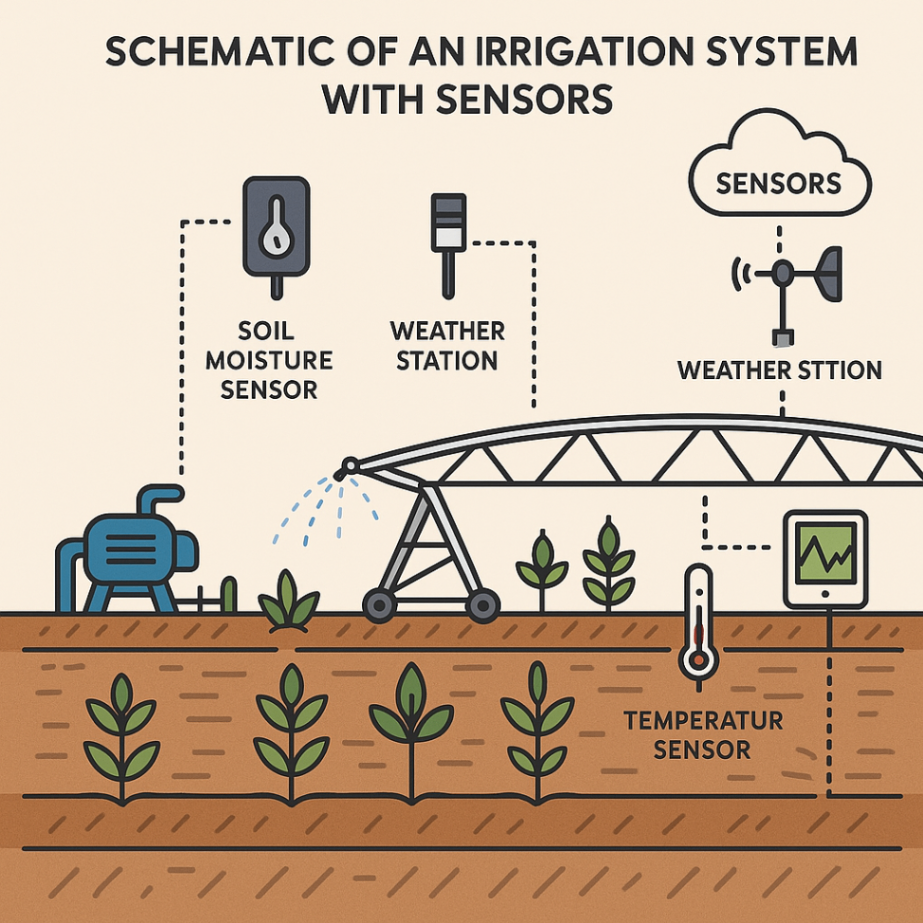
By Dave Oberting, Questr Automation Inc., [email protected], 304.679.1889. Let’s be honest: the cost of keeping a farm running in Appalachia today feels like a losing game. Between skyrocketing diesel prices, fertilizer that costs a small fortune, and a labor market that’s drier than a July drought, it’s easy to feel like you’re working twice as hard just to break even. We’ve all been there: staring at a repair bill or a feed invoice and wondering where the margin went. But here’s the thing: conservation isn’t just for environmentalists; it’s a cost-saving essential for the family farm. At Questr Automation, we see automation not as a luxury, but as a way to do more with less. Through our ROOST program, we’re helping folks see how "smart" farming can actually drop input costs by as much as 30%. Smart Water: Stop the Leaks (and the Leaching)Water is life, but too much in the wrong place is a waste of money. By using low-cost soil moisture sensors for small farms, you can stop guessing when to turn the pumps on. These sensors tell you exactly how much moisture is in the root zone, preventing over-irrigation. Why does that matter? Because over-watering doesn’t just waste water: it causes nutrient leaching (literally washing your expensive fertilizer away) and water-logging. When you use only what you need, you save the water and the soil. Energy Efficiency: Run Leaner, Not HarderEnergy costs: especially diesel and electricity: can eat a hole right through your profit. Automated systems allow you to run equipment only when it’s strictly necessary. Imagine your fans or pumps running on a precise schedule based on real-time climate data rather than a manual timer. Plus, with predictive maintenance: sensors that tell you a bearing is about to fail before it actually snaps: you avoid those $1,000 emergency repair bills and the downtime that kills your season.
Precision Nutrients: Feed the Crop, Not the WeedsBlanket spraying is a relic of the past. With precision livestock monitoring for cattle and poultry, and automated nutrient application, you’re putting the good stuff exactly where it needs to go. Automated feed systems reduce waste by ensuring animals are fed the right amount at the right time: no more "eyeballing it" and watching your profits end up on the barn floor. It’s about being smarter, not working harder.
The best part? These savings stack up. Less water used means lower electricity bills for the pumps; less runoff means your fertilizer stays in the dirt where it belongs. If you’re ready to see how affordable farm automation for West Virginia small farms can work for you, we’re here to help. Let's chat about making your operation more resilient: give us a shout or check out our ROOST program details.
By Dave Oberting, Questr Automation LLC, [email protected], 304.679.1889. Running a family farm in Appalachia often feels like a race against the sun where the sun always wins. You’re dealing with severe labor shortages, rising costs, and that nagging feeling that you’re working harder just to break even. We get it: the "daylight to dark" grind is real, and it’s exhausting. But here’s the thing: most of the "labor" eating your day isn't actually making you money. It’s just maintenance. Here are seven mistakes we see every day and how affordable farm automation can turn things around. 1. Manual Climate Monitoring for PoultryAre you still walking the house five times a day to check fans and vents? Automated climate control for small poultry houses keeps birds in the comfort zone 24/7. While a farm hand might cost you $20–$25 an hour, a smart controller works for pennies. 2. The "Bucket Brigade" Watering RoutineIf you're still hauling water or manually checking troughs, you’re losing hours. Simple, sensor-backed automatic waterers ensure your livestock are hydrated without you lifting a finger: or a bucket. 3. Visual-Only Cattle Health ChecksWaiting until a cow looks sick is a costly mistake. Precision livestock monitoring for cattle and poultry using ear tags or sensors flags issues before they become emergencies. It’s like having a vet’s assistant watching your herd while you sleep. 4. Underestimating Your Own TimeMost farmers value their labor at $0. That’s a mistake. If you can save 500 labor hours annually through the ROOST program, that’s nearly 63 full workdays you get back. 5. Inefficient WorkflowsWe often do things "the way they’ve always been done." Through our Blue Collar Lab and ROOST apprenticeship, we teach farmers how to use tech to streamline daily chores so you focus on high-value decisions, not repetitive tasks. 6. The "Always-On" BurnoutYou can’t be in two places at once. Automation doesn't replace you; it frees you. Remote alerts mean you only head to the barn when there’s an actual problem, not just "to check." 7. Fearing the Cost of TechMany think automation is for "the big guys." But think of it this way: would you rather pay a part-time helper thousands a year or invest in a cost-saving essential that costs less than a monthly cell phone bill? Let’s Modernize Your OperationAutomation isn't about replacing the family farm; it’s about strengthening it. By cutting input costs by up to 30% and saving hundreds of hours, you ensure your farm stays in the family for the next generation. Ready to see how the ROOST initiative can help your farm?Or contact me at [email protected] or 304.679.1889. We’re here to help you work smarter, not harder. 6/15/2026 tractor retrofitting 101: a beginner's guide to mastering autonomous steering kitsRead Now
By Dave Oberting, Questr Automation LLC, [email protected], 304.679.1889 I get it. You look at the glossy brochures for those new $400,000 "autonomy-ready" tractors and you think two things: 1) That would solve half my problems, and 2) I’d have to sell the back forty just to afford the down payment. It’s a tough spot to be in. Across Appalachia, we’re all feeling the same squeeze. It’s harder than ever to find a reliable hand who knows their way around a field, and when you do find someone, the margins are so thin that paying a competitive wage feels like a gut punch. You’re working longer hours, fuel costs are creeping up, and you’re exhausted. But here’s the secret the big equipment dealers aren’t shouting from the rooftops: You don’t need a new tractor to get new technology. If you have a mechanically sound tractor sitting in your barn right now: even if it’s twenty years old: you already own the most expensive part of a self-driving machine. Retrofitting tractors with autonomous steering kits is the "secret menu" of modern agriculture. It’s how we’re helping family farms stay competitive without taking on a mountain of debt. Stop Buying New, Start Making "Old" SmarterThe biggest mistake I see small-to-mid-sized producers make is thinking that "automation" is a luxury for the big guys out West. It’s not. In fact, for an Appalachian farm with irregular fields and tight holler spaces, practical automation is a cost-saving essential. Think about it this way:
It’s a no-brainer. When you retrofit, you’re taking a tool you already know, trust, and have paid for, and you’re giving it "eyes" and "brains." You’re solving the farm labor shortage for good by making yourself: or the one hand you can find: three times as productive. What Exactly is a "Retrofit Kit"?If you’re new to this, the terminology can get a little messy. Let’s break it down into two main flavors of tech you can bolt onto your current rig: 1. Autosteer (The "Hands-Free" Assistant)This is the most common entry point. You mount a GPS antenna on the roof, swap out your steering wheel for a motorized one (or plug into the hydraulics), and add a display in the cab.
2. Full Autonomy (The "Driverless" Shift)This is where things get exciting. Companies like Sabanto or Bluewhite offer kits that can actually take over the throttle, hitch, and PTO.
Start Small, Scale FastYou don’t have to go "full robot" on day one. Most of the folks we work with through the ROOST initiative start with high-accuracy guidance. If you’re running a small poultry or cattle operation, your first goal shouldn’t be 24/7 autonomous operation. It should be precision. Using a kit with RTK (Real-Time Kinematic) correction gives you sub-inch accuracy. In Appalachia, where our fields aren't exactly flat rectangles, that level of precision is the difference between a profitable hay season and just breaking even. The ROI: Doing the Math (So You Don't Have To)Let’s talk real numbers. If you’re paying a farmhand $20/hour (and that’s a low estimate when you factor in taxes and insurance), and they’re on a tractor for 500 hours a year, that’s $10,000 in labor costs just for one seat. Compare that to a high-end autosteer retrofit:
In most cases, the kit pays for itself in less than two seasons. And once it’s paid for, you’re essentially "hiring" a driver who never gets tired, never misses a row, and only costs you a few bucks a day to run. You can even use our ROI Calculator to see how these numbers look for your specific acreage.
Why Appalachia Needs This NowWe’ve always been a region of innovators. We’ve had to be: the terrain doesn’t give us anything for free. But as the average age of farmers rises and the younger generation looks for tech-forward careers, we have to modernize. Affordable farm automation for West Virginia small farms (and our neighbors across the region) isn't just about being "fancy." It’s about resilience. When you retrofit your equipment, you’re making your farm "future-proof." You’re creating the kind of high-tech environment that keeps kids interested in staying on the land. That’s why we started the Blue Collar Lab. We aren't here to sell you a box of parts and wish you luck. We’re here to help you identify the right kit, install it, and train you: or your apprentice: to use it. Is Your Tractor Ready for a "Brain"?Before you jump in, there are a few things to check. Not every tractor is a candidate for every kit, but most are more "ready" than you think.
If you aren't sure about the technical stuff: don't sweat it. That’s what we’re here for. We specialize in being the "integrator." We look at your fleet, your crops, and your budget, and we find the match that actually makes sense.
Final Thoughts: The Future is Already in Your BarnThe farm labor shortage isn't going away, and new tractor prices aren't coming down anytime soon. But the technology to solve these problems is more accessible than it has ever been. Retrofitting is the middle ground. It’s the practical, blue-collar way to bring your operation into the 21st century without losing the soul of the family farm. You keep your favorite tractor; you just make it work harder so you don’t have to. If you’re tired of the "labor hunt" and want to see how these kits can work on your specific land, let’s talk. We’re doing some incredible things with the ROOST program right now, and we’d love to show you what’s possible. Ready to see the numbers for your farm?
By Dave Oberting, Questr Automation LLC, [email protected], 304.679.1889.
Look, I get it. The last thing you want after a twelve-hour day is to sit down in front of a glowing screen and try to remember a password for some "cloud-based dashboard" that’s supposed to tell you if your cows have water. If you wanted to spend your life staring at a laptop, you would’ve taken a cubicle job in the city. The common myth in "AgTech" is that more data requires more screen time. But for the independent family farmer in Appalachia, that’s not a solution: it’s a second job. At Questr Automation, we believe that if a piece of technology requires you to become an IT guy just to check a gate, then the technology has failed you. The "No-App" Approach: If You Can Text, You’re ReadyTrue automation should be invisible. We focus on what we call "Zero Friction" systems. This means you don’t need to download an app, update your firmware, or navigate a complex menu. Instead, our smart sensor networks talk to you like a neighbor would: via a simple text message.
It’s direct, it’s fast, and it works on that beat-up flip phone just as well as the latest iPhone. You get the information you need, you make a decision, and you get back to work. No logins required. Physical Switches Over Digital SlidersWe’re building what we call the Blue Collar Lab. In our world, a physical "Override" switch on the wall is worth more than a thousand digital buttons. We prioritize hardware that feels like a tool, not a toy. If you need to flush the waterlines in the poultry barn, you should be able to flip a ruggedized toggle switch: not hunt through a smartphone menu with muddy hands.
We Do the "Nerdy Stuff" So You Don't Have ToThrough the ROOST initiative, we handle the integration, the wiring, and the "nerdy" backend work. We partner with local schools like Eastern West Virginia Community & Technical College to ensure there’s a local workforce ready to maintain these systems.
Automation should feel like a reliable hired hand: one that shows up on time, doesn't complain, and never asks you to reset your password. If you’re ready to reclaim your time without touching a keyboard, calculate your potential savings or reach out to us. We’re here to help you work smarter, not harder. By Dave Oberting, Questr Automation LLC, [email protected], 304.679.1889. Running a family farm in Appalachia often feels like a marathon: one where you’re also expected to be a full-time accountant, data scientist, and logistics manager. Between checking the fence and feeding the herd, who actually has time to sit at a desk and log every $25 purchase or field observation? Most of us end up with a dashboard covered in faded receipts and a notebook that’s mostly mud and mystery. The truth is, manual recordkeeping is a massive hidden cost. If you’re spending 10 hours a week on paperwork, that’s time you aren’t spending on the things that actually grow your bottom line. But here’s the good news: you don't need a Silicon Valley budget to get your time back. At Questr Automation, through our ROOST program, we’re helping farms across the region implement low-cost, "set-it-and-forget-it" systems. Here are 7 practical AI hacks to reclaim your week. 1. Ditch the Pen for Voice-to-TextYou’re in the field, you notice a weak spot in the fence or a calf that looks off. Instead of trying to remember it for later (spoiler: you won't), use voice-to-text. Apps like Otter.ai or even your phone's built-in recorder can transcribe your notes instantly. You can even use a simple automation to send those notes straight to a "To-Do" list or a spreadsheet.
2. Automated Expense TrackingConnecting your farm bank account to QuickBooks Online or a similar tool is a cost-saving essential. It automatically pulls in every transaction. Instead of typing in "Feed Store - $450," the software sees the charge and categorizes it for you. It’s about as close as you can get to an accountant in your pocket. 3. Simple Digital Forms for Harvest LogsPaper logs get lost or soaked. Set up a simple Google Form or Airtable link on your phone’s home screen. When you finish a harvest or a spray run, just tap a few buttons on your phone. It populates a spreadsheet automatically, giving you real-time data on your yields without the "shoe leather" data entry. 4. AI-Powered Receipt ScanningStop the "shoebox of receipts" madness. Use an app like Dext or Expensify. You snap a photo of the receipt at the register, and AI reads the vendor, the date, and the total. It then syncs that data directly to your accounting software. No more typing, no more lost deductions.
5. Automated InvoicingIf you sell direct-to-consumer or to local restaurants, stop manual billing. Tools like Square or QuickBooks can send automated recurring invoices. If a customer pays the same amount every month, the system handles the "chasing" for you, saving you hours of awkward follow-up emails. 6. Pattern Recognition for Pest LogsNot sure what’s eating your crop? Use AI-powered photo recognition tools like Xarvio. Snap a photo of the leaf, and the AI identifies the pest or disease. It logs the location and the time, helping you build a "history" of your land so you can predict (and prevent) outbreaks next year. 7. Customer Follow-Up AutomationsIf you’re running a CSA or a farm stand, your customers want to feel connected. Use simple CRM (Customer Relationship Management) automations to send a "Thank You" or a "What’s in the Box" email automatically. It keeps your brand top-of-mind without you having to touch your keyboard. Start Small, Scale FastYou don’t have to do all seven at once. Pick one: maybe it’s the receipt scanning: and watch how much mental "clutter" it clears out. Our mission with the ROOST initiative is to prove that these tools aren't just for 5,000-acre mega-farms; they’re for the family operations right here in Appalachia. If you’re curious about how much time you could be saving, check out our ROI Calculator or get in touch. We’re here to help you stop doing the drudgery and start doing the farming.
Looking For Low-Cost Soil Sensors? Here Are 5 Things Every Small Farm Should Know
By Dave Oberting, Questr Automation LLC, [email protected], 304.679.1889. Let’s be honest: being a small producer in Appalachia often feels like you're running a marathon while juggling chainsaws. Between the rising cost of fuel, the constant scramble for reliable help, and the unpredictability of the weather, it’s easy to feel like you’re always playing catch-up. You know those early mornings and late evenings spent walking the fields just to check if the soil is too dry or if a valve got stuck? That’s valuable time: and shoe leather: you never get back. We’ve all heard about "smart farming," but it usually sounds like something reserved for the massive corporate operations with deep pockets. The good news? High-tech doesn’t have to mean high-cost. Here are five things every small Appalachian farm should know about low-cost soil sensors. 1. You Don’t Need a $10,000 SystemMany folks assume that getting real-time data requires an "enterprise" setup that costs as much as a new tractor. It doesn't. While those $10,000 systems exist, you can get high-quality, reliable sensor kits for $700 to $1,000. That’s roughly 1/15th the price for technology that provides the exact same critical data. 2. Turn Data Into Decisions (Without the Hike)The real magic isn't the sensor itself; it’s the fact that it monitors your soil 24/7. Instead of manual field checks, you get alerts sent straight to your phone. If the moisture level drops below a certain point, you know instantly. This turns "guessing" into "knowing," saving you hours of manual labor every single week.
3. The ROI is Real (and Fast)Automation isn't just a "cool gadget": it’s a cost-saving essential. When you look at the math, the ROI is hard to ignore:
4. No Major Infrastructure RequiredModern sensors are designed for the rugged Appalachian terrain. Most are wireless and solar-powered, meaning you don’t need to run miles of cable or build a server room in your barn. They’re "plug and play": easy to install and even easier to maintain.
5. Start Small, Scale FastYou don’t have to instrument every square inch of your land on day one. Start with your most valuable crops or that remote pasture that’s a pain to reach. Once you see the time and money hitting your bottom line, you can scale up.
At Questr Automation, we specialize in finding these practical, affordable tools that actually work for family farms. If you're ready to stop guessing and start growing more efficiently, get in touch. We’re here to help you modernize without the headache. SEO Post Description: Stop walking the fields and start monitoring from your phone. Discover how affordable, solar-powered soil sensors can save your Appalachian family farm 20+ hours of labor a month and reduce water costs by 30%. Practical automation is finally within reach for the small producer. |
AuthorDave Oberting, Managing Director, Questr Automation Archives
September 2026
Categories
All
|



 RSS Feed
|
Questr Automation, Inc.
Work Less. Live More. 100 N. Loudoun Street, Suite 130, Winchester, VA 22601 [email protected] Connect with us: LinkedIn | Facebook | Instagram | X © 2026 Questr Automation, Inc. All rights reserved. [Privacy Policy] | [Terms of Service] Questr is a proud partner of the ROOST program and BRCC. Questr Automation, Inc. and the ROOST program provide equal opportunities to all participants and applicants without regard to race, color, religion, sex, national origin, age, disability, or genetics. |